We invite researchers across the network to propose pilot projects that can begin with the resources and expertise already available in Latin America. These projects will demonstrate our capacity while we seek funding for larger collaborative efforts.

Each pilot project is modest in scope, with two aims: produce scientific results and develop the shared infrastructure, protocols and partnerships needed for larger genomics initiatives in the region.

Why start with pilot projects?

  • Demonstrate capacity

    Show funders that Caligo is an active network capable of generating and collaboratively analysing genomes in Latin America.

  • Build core workflows

    Develop and test the full process, from field sampling to final data deposition.

  • Train and standardise

    Train the regional network in shared protocols for consistent, high-quality work across sites.

  • Meet regulatory requirements

    Establish clear, replicable processes for permits, Nagoya Protocol compliance and benefit-sharing agreements.

  • Set data standards early

    Define data and quality standards before scaling to larger sample sizes.

  • Build realistic budgets

    Estimate costs based on the actual logistics of fieldwork and sequencing in Latin America.

  • Deliver early results

    Publish scientific results that give the initiative credibility.

  • Connect ongoing work

    Bring existing projects and ideas from the Caligo community together under a shared initiative.

Proposed pilot projects

  1. A Heliconius sapho butterfly resting with its blue-black wings open, revealing broad white bands.

    Heliconius sapho, dorsal view, Colombia. This species belongs to the chromosome-variable sapho group.

    Photo: desertnaturalist / iNaturalist, via GBIF. · Source · CC BY 4.0

    Why did Heliconius chromosomes split and fuse?

    Most Heliconius have 21 chromosomes in each haploid set. Five species in the sapho group have up to 60.

    Compare chromosome-scale genomes to locate the fissions and fusions and test how they changed gene order and recombination.

    Nicol Rueda, Joana Meier, Caroline Bacquet

    Published background and resources

    Across 210 butterfly and moth genomes, Wright and colleagues reconstructed 32 ancestral chromosomal units that remained largely intact for about 250 million years. In five species of the sapho group, repeated fissions raised the count from 21 to as many as 60. Researchers have also identified three independent fusions between autosomes and the female-specific W chromosome. Comparisons among these species can show how chromosome rearrangements alter recombination and sex-chromosome evolution. Existing genomes do not explain why the rearrangements spread.

    The project already has contributors with samples, genomic data and expertise in analysis, ecology and behaviour.

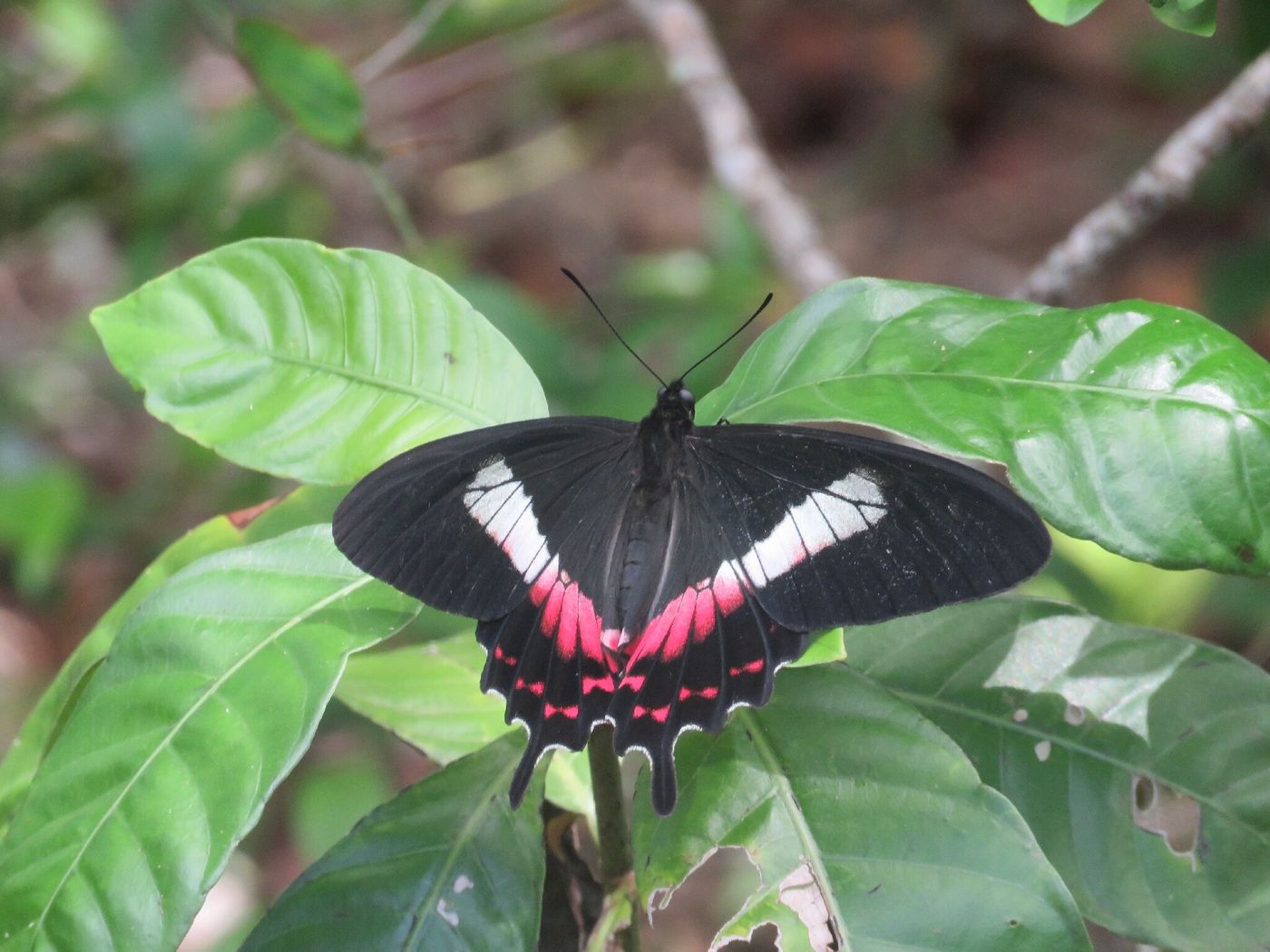
  2. A living Parides ascanius resting with its wings open on green foliage, showing broad white and pink-red bands.

    Parides ascanius, dorsal view, Brazil.

    Photo: Pablo Cauã da Silva Toledo / iNaturalist, via GBIF. · Source · CC BY 4.0

    Are a threatened coastal butterfly’s populations still connected?

    Parides ascanius is restricted to coastal restinga and wetlands in south-eastern Brazil, where urbanisation and drainage have reduced its habitat.

    Build a reference genome from a documented specimen and compare newly sampled populations with the 2016 results, to test whether gene flow or genetic diversity has changed.

    Karina Brandão, André Freitas, Gilberto Almeida

    Published background and resources

    The IUCN assessed Parides ascanius as Vulnerable globally in 2018, while Brazil’s national assessment listed it as Endangered in 2021. A 2016 study used mitochondrial COI sequences and eight microsatellite markers to compare the remaining populations. It found little population structure and inferred substantial migration among most sites. Those results do not show whether the populations remain connected today. Habitat loss and drainage can alter movement before populations become genetically distinct.

    Frozen material and DNA are available, and new field collection is planned.

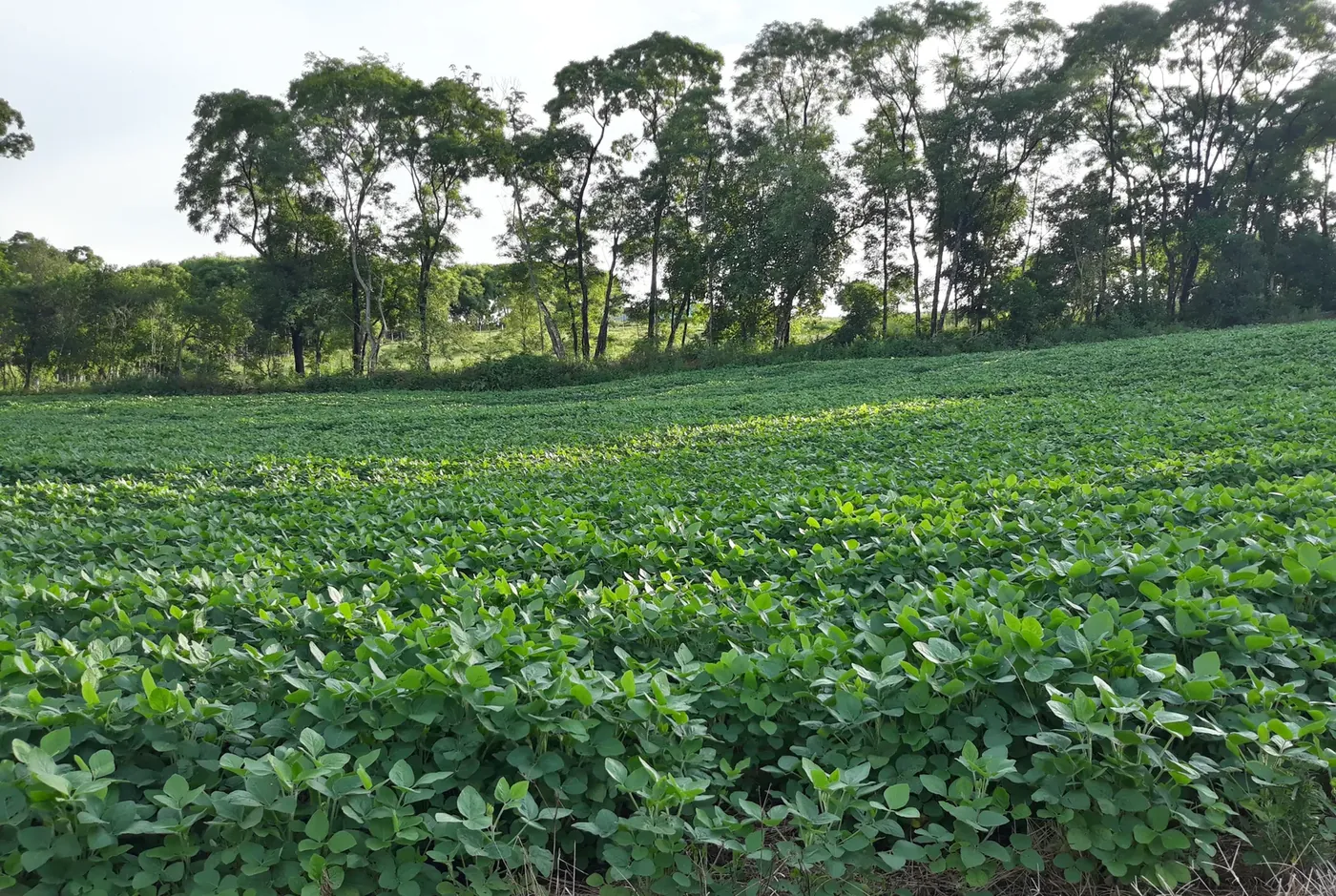
  3. Rows of green soybean plants fill a field bordered by trees in Novo Barreiro, southern Brazil.

    Soybean field in Novo Barreiro, Rio Grande do Sul, Brazil.

    Photo: Lucas Friederich / Wikimedia Commons. · Source · CC BY-SA 4.0

    Pest movement and resistance across soybean landscapes

    Several similar-looking moth species occur in Brazilian soybean fields. Monitoring their movement or insecticide resistance begins with knowing which species was collected.

    Identify the species in existing collections, compare their movement across agricultural regions and test which resistance markers are reliable enough for monitoring.

    Chris Jiggins, Diogo Cavalcante Cabral de Mello, Alberto Soares Corrêa, Henry North

    Published background and resources

    In Brazil, closely related species are confused during monitoring. Brazilian studies have also found that susceptibility to insecticidal proteins is changing, so each species needs repeated testing. Genomic data can distinguish the species, compare movement among populations and identify variants associated with resistance. Field trials, agronomy and growers’ observations are still needed to choose a management response.

    Funding exists for several new reference genomes, and the work could expand to other pests.

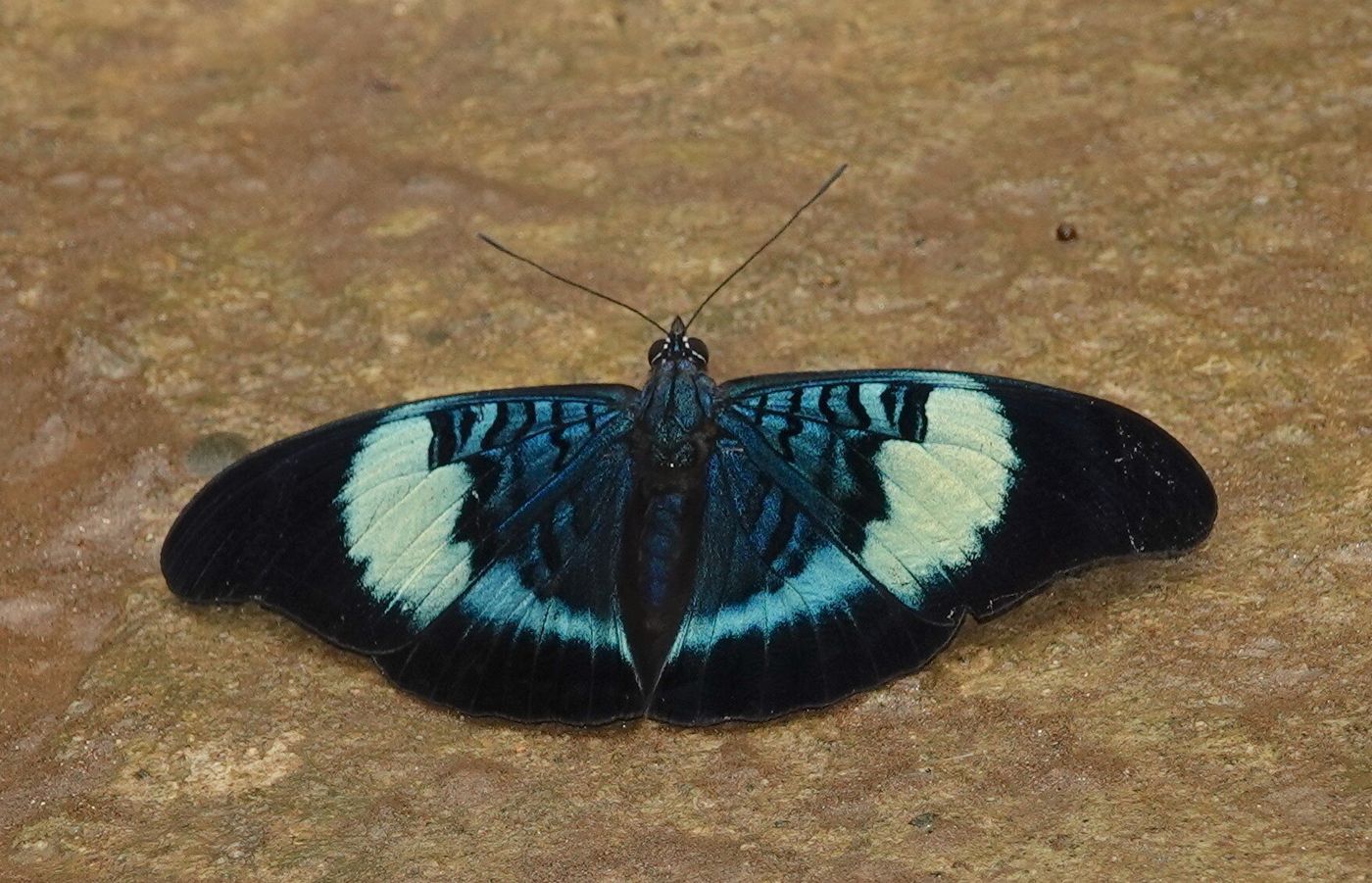
  4. A living Panacea prola with its wings fully open, showing iridescent blue dorsal wings with broad pale bands.

    Panacea prola, dorsal view, Peru.

    Photo: desertnaturalist / iNaturalist, via GBIF. · Source · CC BY 4.0

    Thousands of Panacea prola fly north-east. Where do they come from?

    Do they come from one population or from several?

    Compare samples from different places and seasons to test where these butterflies came from, whether they belonged to one or several populations and whether the movement recurs in different years.

    Vicencio Oostra, Jennifer Stewart, Blanca Huertas, Geoff Gallice

    Published background and resources

    In 2020, Gallice and colleagues recorded 2,509 Panacea prola in 50 one-hour observations in south-eastern Peru. Only 19 flew in another direction. The authors presented this as the first evidence of an Amazonian insect migration. Pham and colleagues published the first Biblidinae reference genome, for Batesia hypochlora, in 2026. It is the closest genomic reference for Panacea, but it cannot say where these butterflies came from.

    The project can draw on existing population genomic data and high-coverage Illumina data from museum holotypes of two subspecies and Panacea procilla.